Julia Pokiak - Trennert
All Genres and Mediums
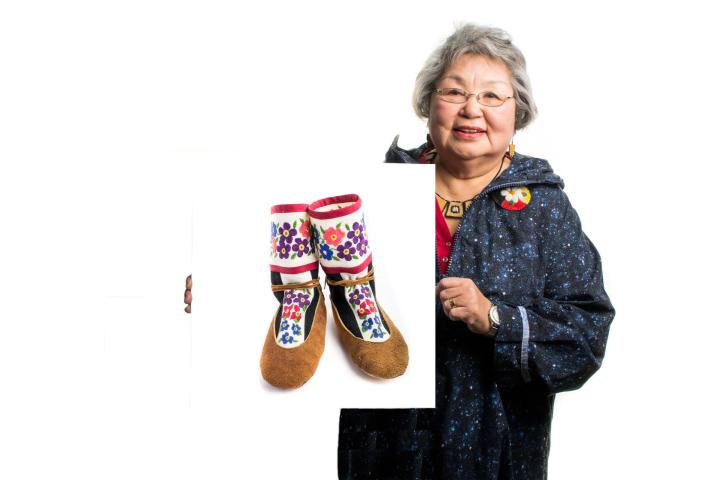
Artist Story
Julia Pokiak Trennert first learned the art of moosehair and caribou hair tufting as a young girl while attending the Immaculate Conception Indian School in Aklavik. There, she was taught the basics of tufting by Sister Beatrice Leduc. After her marriage, she left the Delta region and moved to Fort Simpson, where she became inspired by the beautiful work of renowned tufter Grandma Lafferty. With encouragement and support, including a gift of moosehair from Emily George, Julia began practicing, marking the beginning of a lifelong dedication to her craft.
After relocating to an area south of Fort Providence, she continued working with traditional crafts. When demand for tufted pieces grew, she began creating her own work to fill that need. During this time, she met Bella Bonnetrouge, another highly respected tufter. The artistry of both Mrs. Lafferty and Mrs. Bonnetrouge inspired Julia to develop her own distinctive style.
Julia held her first public show in Yellowknife in the 1980s and went on to participate in numerous festivals, where she shared and promoted her work. In later years, she focused on creating intricate miniature tuftings, which were widely admired and found homes across the world.
To keep her creativity evolving, Julia expanded her practice to include beadwork and embroidery. She often drew inspiration from traditional clothing, nature, and fellow artists. She was known for visualizing her designs in her mind before beginning and embraced the challenge of bringing those ideas to life.
A Métis artist, Julia carried forward a unique art form rooted in both Indigenous materials and European techniques. Moosehair tufting, originally developed in the early 20th century by Mrs. Boniface Lafferty, was passed down through generations and taught by the Grey Nuns across the western Arctic. Julia became one of its most accomplished and innovative practitioners.
She spent much of her adult life in the South Slave region, where she and her husband, Max, operated a well-known gas station and restaurant near the Mackenzie River crossing. Many residents and travelers remember Pineview as a welcoming stop, where Julia—and later her daughter, Brendalynn “Inuk”—shared and sold their distinctive tufted works.
While traditional floral designs were common in tufting, Julia expanded the form with her own interpretations, including morning glories and cattails, as well as original imagery such as drummers, turtles, and mushrooms, motifs that became widely recognized throughout the Northwest Territories. Her work gained significant recognition, including a commission from the Government of Nunavut to create a tufted version of the official crest, which now hangs in the Nunavut Legislative Assembly.
Never confined by expectations of tradition, Julia allowed her imagination to guide her. In her later work, she drew inspiration from nature and began incorporating elements such as antler and wood into custom frames for her miniature pieces.
Julia’s work reflected her creativity, innovation, and deep respect for her cultural roots. Her legacy continues through the art form she helped sustain and evolve, and through the many pieces of her work that are cherished across the North and beyond.
Artist Gallery


Click on the image above to browse the complete gallery.