Mary Neyelle
All Genres and Mediums
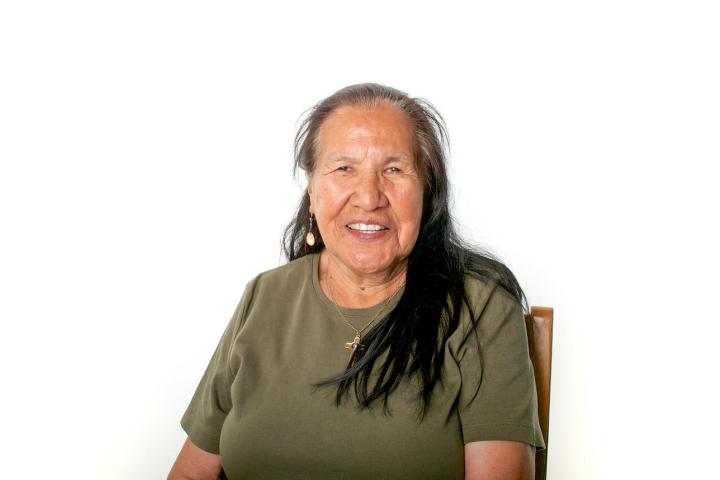
Artist Story
Mary Neyelle was originally from Wrigley, Northwest Territories. Her parents were also from the Dehcho region, and her mother, Marie Hansetti, had family ties in Hay River. She later married a Sahtu Mountain Dene man, and together they raised eight children and adopted another son.
Mary began beading at the age of 15. She was taught by her mother and aunts in Old Fort Wrigley. In her early years, she learned traditional techniques using porcupine quills, silk embroidery, moosehair tufting, and yarn, as seed beads were not widely available at the time. It was not until around 1945, when Hudson’s Bay Company traders arrived in the Mackenzie River District, that seed beads became more accessible.
Over her lifetime, Mary created a wide range of beautifully crafted items, including moccasins, gauntlets, mitts, slippers, mukluks, beaded gloves, moosehide vests, scissor cases, needle cases, gun cases, credit card holders, eyeglass holders, ponytail holders, watch straps, stroud picture frames, and various uppers. She took great care in selecting beads, thoughtfully choosing colours that complemented her floral and decorative designs.
Mary learned to sew and bead from her mother and sister, and she developed a deep love for creating clothing and other items for her family. She began by making slippers and continued to refine her skills through years of practice. Over time, she created handmade slippers and mitts for each member of her family, which brought her great joy.
She had been making her artwork since she was a teenager, and in the early years, the learning process was challenging. She often took apart her early work and redid it until she was satisfied, demonstrating her patience and commitment to her craft. She drew her own designs and created her own patterns, carefully cutting each piece herself. She especially enjoyed floral designs and often worked with red, blue, and pink beads, choosing between shiny and matte finishes depending on the piece.
For Mary, sewing and beading brought a deep sense of fulfillment. It kept her hands busy and her mind focused, and she found great satisfaction in completing each project. After a lifetime of sewing to provide for her family, she later shared and sold her artwork to others who appreciated her skill and dedication.
Mary’s work reflected her creativity, resilience, and strong connection to her culture and family. Her legacy continues through the many pieces she created and the traditions she carried forward.
Artist Gallery


Click on the image above to browse the complete gallery.